
I
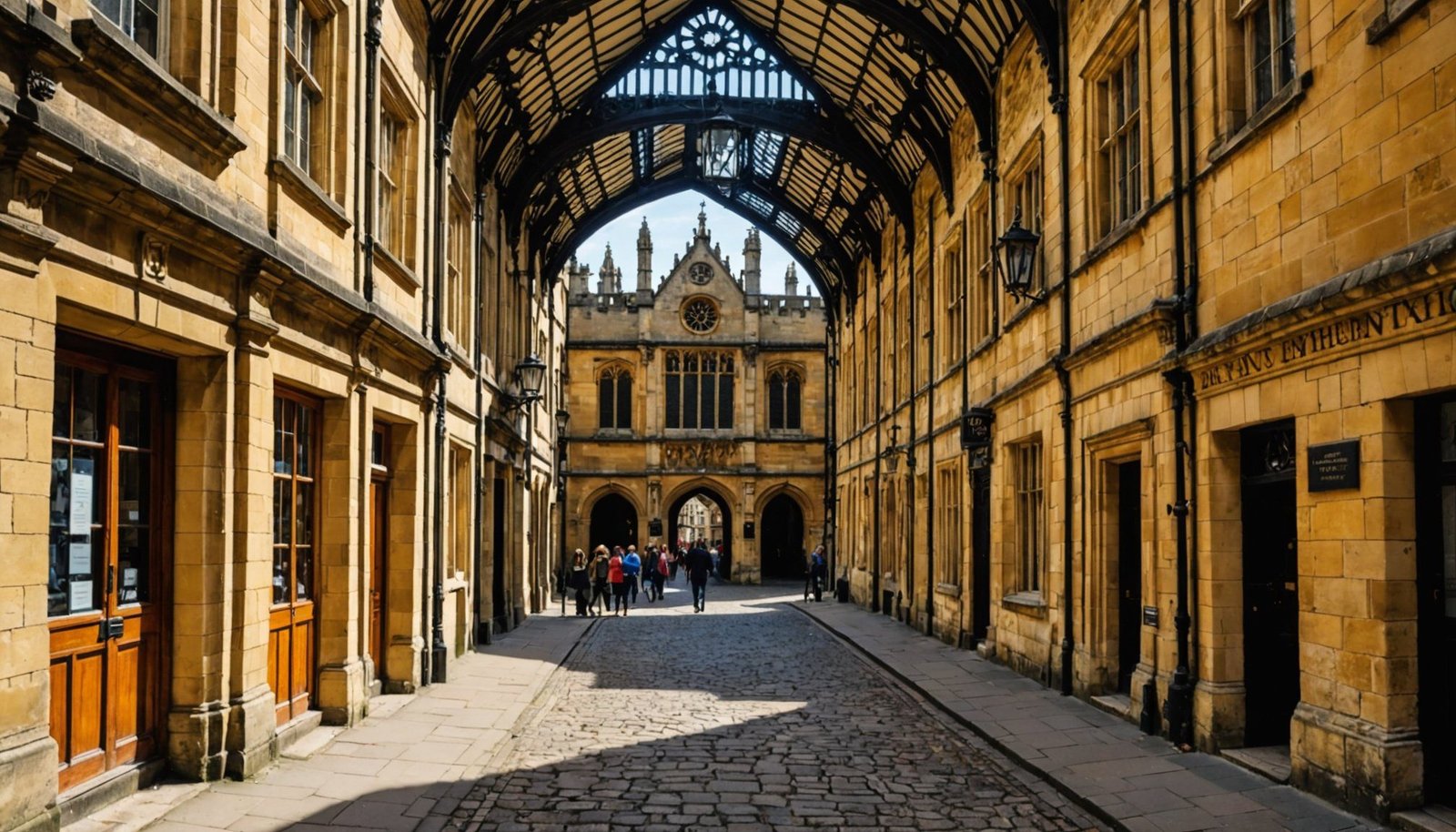
Oxford is a city that wears its history with quiet confidence. Known the world over for its dreaming spires and scholarly traditions, it’s easy to be swept away by the grand facades of the Bodleian Library, Radcliffe Camera, and Christ Church College. Yet beyond these postcard landmarks lies another Oxford, one of discreet courtyards, tucked-away passageways, and architectural treasures often overlooked by hurried visitors.
For those willing to wander off the main thoroughfares, the city reveals a different layer of its character: refined, intricate, and beautifully preserved. This guide uncovers some of Oxford’s most enchanting hidden architectural gems, offering a glimpse into the city’s quieter, more contemplative corners.
1. St Helen’s Passage & The Turf Tavern
Tucked between Holywell Street and New College Lane lies St Helen’s Passage, a narrow, twisting alleyway that feels almost unchanged since the Middle Ages. Its cobbled path leads you to the Turf Tavern, one of Oxford’s oldest and most atmospheric pubs.
While many visit the Turf for its literary and celebrity associations from Bill Clinton to Inspector Morse, few pause to appreciate the architecture of the passage itself. The tightly packed medieval buildings, timber beams, and wonky walls are a tangible reminder of Oxford’s earlier urban fabric, before the rise of Georgian symmetry and Victorian grandeur.
Insider tip: Visit during the early morning or late afternoon when the alley is empty, and you’ll feel transported back several centuries.
2. The Bridge of Sighs From a Different Angle
Most visitors photograph the Bridge of Sighs from New College Lane, facing Hertford College. However, locals know that the rear angle from Catte Street, near the Bodleian, offers a more striking architectural perspective.
The bridge itself, built in 1914, is a curious blend of Venetian inspiration and Edwardian flourish. Its ornate windows and delicate stonework reflect Oxford’s habit of blending styles across centuries. From the less crowded rear angle, you can truly appreciate its asymmetry and how it gracefully connects two buildings across the lane.
3. The Radcliffe Observatory Quarter
While the Radcliffe Camera steals most of the limelight, few visitors venture northwards to the Radcliffe Observatory Quarter, a serene area showcasing neoclassical architecture inspired by ancient Greece.
The Radcliffe Observatory, completed in 1794, was modelled on the Tower of the Winds in Athens. Its elegant octagonal tower, crowned with classical statues, remains one of Oxford’s most exquisite architectural statements. Today, the surrounding quarter blends this historic structure with thoughtfully designed modern buildings by leading architects, offering a masterclass in how old and new can co-exist harmoniously.
Don’t miss: The view from Walton Street, where the Observatory emerges gracefully between Georgian terraces.
4. St Mary Magdalen Church A Gothic Treasure
Overlooked by many rushing from the train station towards the city centre, St Mary Magdalen Church, opposite the Randolph Hotel, is one of Oxford’s true Gothic gems. Its 13th-century tower and intricately carved stonework are among the finest examples of medieval craftsmanship in the city.
Inside, the stained glass windows and vaulted ceilings create a contemplative atmosphere rarely found in busier tourist spots. The church played an important role during the English Reformation and continues to be a place of quiet reflection amidst the bustle of Oxford.
5. Merton Street Oxford’s Most Beautiful Street
Ask a local for Oxford’s most photogenic location and many will bypass the High Street entirely in favour of Merton Street. Paved with traditional cobblestones and flanked by centuries-old college walls, the street feels almost cinematic.
Merton College, one of Oxford’s oldest (founded in 1264), anchors the street with its medieval quad and chapel, while Corpus Christi and Christ Church lie nearby. Unlike the High, Merton Street remains blissfully free of buses and heavy traffic, allowing its architectural beauty to shine undisturbed.
Top tip: Visit at dawn when the morning light softens the stone façades — a favourite time for local photographers and historians alike.
6. Rhodes House A Hidden Architectural Masterpiece
Nestled behind the High Street, Rhodes House is a magnificent example of early 20th-century architecture, often missed by casual wanderers. Designed by Sir Herbert Baker in the 1920s, the building fuses traditional Cotswold stone with a layout inspired by classical villas.
Its grand portico, elegant gardens, and wood-panelled interiors make it a hidden gem for those interested in architectural history. Though its history is complex intertwined with the legacy of Cecil Rhodes the building itself remains one of Oxford’s most fascinating architectural statements from the interwar period.
7. Holywell Street Georgian Elegance Preserved
Parallel to the busy Broad Street, Holywell Street is a quiet residential lane lined with perfectly preserved Georgian townhouses. Each building tells a story through its fanlights, wrought iron railings, and harmonious proportions.
Many of these houses are still occupied by academics and musicians, as the street lies close to the Holywell Music Room, the oldest purpose-built concert hall in Europe. Walking down Holywell Street feels like stepping into a Jane Austen novel, offering a glimpse of everyday Oxford life in the 18th and 19th centuries.
Rediscovering Oxford Through Local Eyes
Oxford’s international fame can sometimes obscure the quieter stories written into its streets and stones. These hidden architectural gems remind us that the city’s beauty isn’t confined to its headline landmarks. it’s woven into every alleyway, arch, and spire.
Whether you’re a lifelong resident or a curious visitor, taking time to look beyond the obvious rewards you with richer experiences and a deeper appreciation for Oxford’s layered architectural heritage.
At Florence of Oxford, we celebrate this unique interplay between history and modern living. Just as these architectural treasures reveal the city’s character, so too do the homes, streets, and neighbourhoods we cherish. Next time you find yourself wandering through Oxford, pause, look up, and let the hidden beauty of this extraordinary city unfold before you.